The Highlight of my day was when : I did iExperience with Mr Hattie.
I did a iExperience about how computer's or play station without using a device. We got in groups of 7.
Learners: Saniya, Louisa and Harry
Learning Coach: Radha Moopanar Date: 11 November
|
Learning Area: iExplore
Key Competency: Participating and Contributing
NZC AO: Level 2 Language Features:
uses a large and increasing bank of high-frequency, topic-specific, and personal-content words to make meaning & shows an increasing knowledge of the conventions of text
|
Learning Observed
|

In iExplore we worked collaboratively in small groups to create and present our new learning with our hapu group and get feedback from them on our learning. The focus for this particular activity was to choose two things that we learnt from our iExplore and create a compare and contrast map to share what we learnt. We share ideas for topics and make open ended questions that we can research and explore. Having the opportunity to make choices about our learning promoted self directed learning, and this increased our focus and motivation. Saniya, Louisa and Harry recorded their compare and contrast map on a chart so all could look at them. It was great to see them make connections to their curiosities.
|
Evidence of learning
|
 |
Next Learning Steps
|
|
Louisa
Learning Coach: Radha Moopanar Date: 3 November 2016
|
Learning Area: iDevelop: Speaking, Writing and Presenting
Key Competency: Using Language, Symbols and Text
NZC AO: Level 2 Language Features:
Students will: • Select and use sources of information, processes, and strategies with some confidence to identify, form, and express ideas.
|
Learning Observed
|
  This term our learners developed their curiosities in narrative writing.Louisa participated in workshops to plan, write, edit and present her writing. The learners were introduced to narrative structure and language features. Louisa used feedback provided by the Learning Coach and her peers to make improvements to her overall performance. The use of a google document allowed Mrs Moopanar to provide ongoing feedback to the learners regarding their narrative content and organisation. Louisa collaborated with other learners to practice and apply her presentation and writing skills. The learners used devices to publish their narratives and used these publishings to observe, notice and make changes to their narratives. With support and guidance Louisa was able to share her knowledge and use appropriate structure and language to inform the audience. It was great to see Louisa practice and apply her writing skills to develop an overall curiosity both at writing and presenting to inform. Ka pai! This term our learners developed their curiosities in narrative writing.Louisa participated in workshops to plan, write, edit and present her writing. The learners were introduced to narrative structure and language features. Louisa used feedback provided by the Learning Coach and her peers to make improvements to her overall performance. The use of a google document allowed Mrs Moopanar to provide ongoing feedback to the learners regarding their narrative content and organisation. Louisa collaborated with other learners to practice and apply her presentation and writing skills. The learners used devices to publish their narratives and used these publishings to observe, notice and make changes to their narratives. With support and guidance Louisa was able to share her knowledge and use appropriate structure and language to inform the audience. It was great to see Louisa practice and apply her writing skills to develop an overall curiosity both at writing and presenting to inform. Ka pai! |
Evidence of learning
|
Please see the following links for Narrative presentation
|
Next Learning Steps
|
|
Learner: Louisa Learning Coach :R.Moopanar Date: 23 October 2016 Week 1-2 Learning Area: Science
|
Learning Observed
|
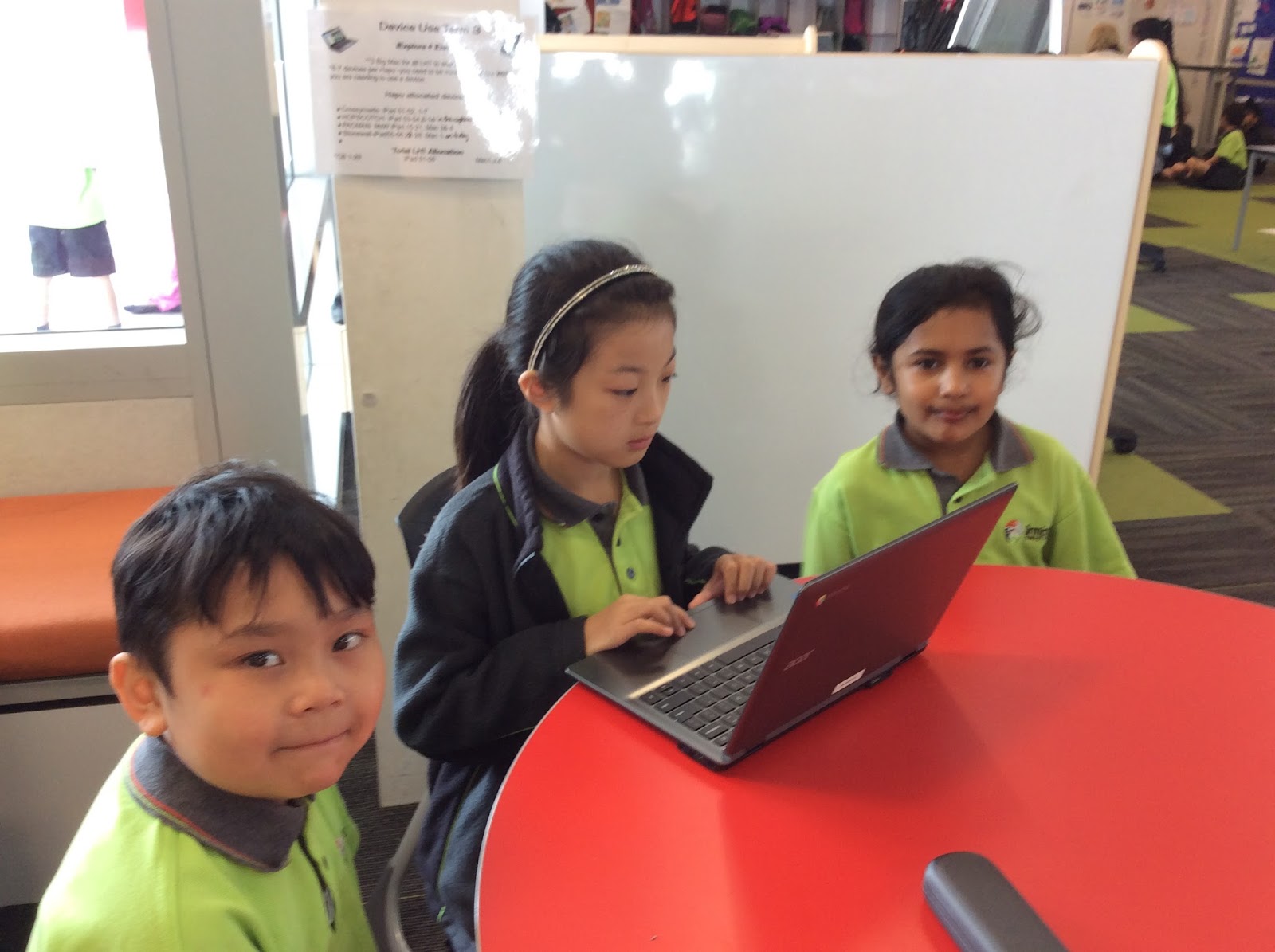
For the past few weeks the learners have been engaged in a curiosity quest! The learners were given the choice of 8 curiosity quests which included: Why it is important to learn about eggs, imaginary planets, can humans live on another planet, why are New Zealanders called kiwis, how did dinosaurs live, telling the time and why is the solar system an exciting place - each of which would develop their curiosity. Saniya, Harry and Louisa enjoyed the first week of ‘discovery learning’ where they had some choices of tasks to complete to help them get familiar with the planets of the solar system and make connections to their prior knowledge. They watched videos and created a KWL chart about what they knew and what they wanted to learn about the planets of the solar system. They created a slideshow of their learning. Harry and Louisa also supported Saniya with finding information - great collaboration and leadership. Thereafter they worked collaboratively to design and create a poster to compare and contrast two planets of their choice . In order to create the poster successfully there was a lot of discussion. They showed their curiosity, thinking and managing self skills by looking at what others had done and making connections to what they wanted to achieve. See their presentation here.
|
Evidence of learning
|
 |
Next Learning Steps
|
|
Learner: Julian, Mahi, Sharon, Samar and Lousia Learning Coach: Mr Hattie Date: 13 October 2016
|
Learning Area: Learning Habitat 1 - iExperience
|
Learning Observed
|
Term 4 started off with a ‘Bang’ as we had our trip to MOTAT - Museum of Transport and Technology. For the trip our iExperience have been based around simple machines and Da Vinci. Julian, Mahi, Sharon, Samar and Lousia chose to do the Pulley System iExperience. Their task was to create a pulley system out of the material provided for them. They watched a video about the way pulley’s work and then they applied the knowledge in a practice way. Julian, Mahi, Sharon, Samar and Lousia started and was not too sure about how to make it work. We discussed that for it work effectively we need more than one pulley and that sparked some ideas. Julian suggested to have another pulley at the bottom. Sharon and Samar said that they need to have one end of the rope static. This will allow the pulley to use more force. This was great to hear as they were Connecting the knowledge they gained from the video to the practical task. Mahi and Louisa were asking a lot of questions which allowed the group to think through the problems. Julian, Mahi, Sharon, Samar and Lousia showed the Vision Principles of Curious and Collaboration.
|
Evidence of learning
|
 
They have figured out that having a static line was useful.
|
Next Learning Steps
|
Julian, Mahi, Sharon, Samar and Louisa next steps are:
|
Louisa
Learning Coach: Stephanie Hooker & D Wilkes Date: 2 September 2016
|
Learning Area: iDevelop: Speaking, Writing and Presenting
Key Competency: Using Language, Symbols and Text
NZC AO: Level 2 Language Features:
Students will: • Select and use sources of information, processes, and strategies with some
confidence to identify, form, and express ideas.
|
Learning Observed
|
This term our learners developed their capabilities in speech writing. Louisa participated in workshops to plan, write, edit and present her speech. The learners were introduced to persuasive language, speech organisation and effective speaking skills & strategies. Louisa used feedback provided by the Learning Coaches and her peers to make improvements to her overall performance. The use of a google document allowed Mrs Hooker and Ms Wilkes to provide ongoing feedback to the learners regarding their speech content, organisation and persuasive writing. Louisa collaborated with other learners to practice and apply her presentation and speaking skills. The learners used iPads to record each other speaking and used these recordings to observe, notice and make changes to their volume, pace, eye contact, body language and overall confidence.
 
With support and guidance Louisa was able to share her knowledge and use appropriate language to inform the audience.
It was great to see Louisa practice and apply her public speaking skills to develop an overall capability both at speaking and writing to inform. Ka pai!
|
Evidence of learning
|
Please see the following links:
|
Next Learning Steps
|
 |
 YAY! I love playing games especially with my good friends & when I'm not I play with my lovely brother Justin L.
Narrative Assessment:
Learning Coach: Diana Wilkes Date: 25 August 2016
|
Learning Area: Maths
Key Competency: Using language, symbols & texts, Managing Self
NZC AO: Level 2 Measurement→ Create and use appropriate units and devices
to measure length, area, volume and capacity, weight (mass), turn
(angle), temperature, and time.
|
Learning Observed
|
  We have had a mathalicious two weeks! Norah, Momo and Louisa have participated in the Mathlympics iExperience which has involved a series of measurement challenges, a BreakOut code team problem solving tak and an archery challenge, The mini-mathlympics iExperience enabled the girls to be curious as they explored the resources in the various mathlympics activities where they measured volume, capacity, distance, time and practiced setting up a calendar. They were encouraged to explore the different resources and see how they could build on their maths capability. They connected the knowledge that they already had about good ways to practise maths capability with the equipment and used it to make conclusions about what to do with the equipment. In the BreakOut EDU activity the girls collaborated well and managed to crack some codes. It was great to observe how well the girls collaborated together and how they applied their prior knowledge to the bow and arrow design. The girls were inspired by some videos before they began to draw their design and list the materials needed. They built their design with materials making modifications as they went and practiced shooting before the final competition. We have had a mathalicious two weeks! Norah, Momo and Louisa have participated in the Mathlympics iExperience which has involved a series of measurement challenges, a BreakOut code team problem solving tak and an archery challenge, The mini-mathlympics iExperience enabled the girls to be curious as they explored the resources in the various mathlympics activities where they measured volume, capacity, distance, time and practiced setting up a calendar. They were encouraged to explore the different resources and see how they could build on their maths capability. They connected the knowledge that they already had about good ways to practise maths capability with the equipment and used it to make conclusions about what to do with the equipment. In the BreakOut EDU activity the girls collaborated well and managed to crack some codes. It was great to observe how well the girls collaborated together and how they applied their prior knowledge to the bow and arrow design. The girls were inspired by some videos before they began to draw their design and list the materials needed. They built their design with materials making modifications as they went and practiced shooting before the final competition. |
Evidence of learning
|
  |
Next Learning Steps
|
|


